John Galliano: Fashion as Theatre
John Galliano has always treated fashion as a world that could be invented from scratch. His runways became historical fantasies filled with characters, dramatic silhouettes, theatrical makeup and references that moved freely between centuries and cultures. A Galliano show rarely felt like a conventional presentation – it had a plot, an atmosphere and its own visual universe.
Born in Gibraltar in 1960 and raised in London, Galliano studied fashion at Central Saint Martins. His 1984 graduate collection, Les Incroyables, inspired by the French Revolution, immediately attracted attention and was bought by London boutique Browns. It introduced many elements that would define his career: historical research, romance, theatricality and an obsession with character.
After establishing his own label, Galliano moved to Paris. In 1995, he became creative director of Givenchy, making him the first British designer to lead a French haute couture house. Only a year later, he was appointed to Dior, where he would spend almost fifteen years.
At Dior, Galliano created some of the most memorable fashion shows of the late 1990s and 2000s. He transformed the house archives through his own extravagant imagination – enormous couture gowns, corsets, embroidery, sculptural tailoring and cinematic styling. Collections drew inspiration from everything from ancient Egypt and Edwardian dress to opera, painting and old Hollywood.


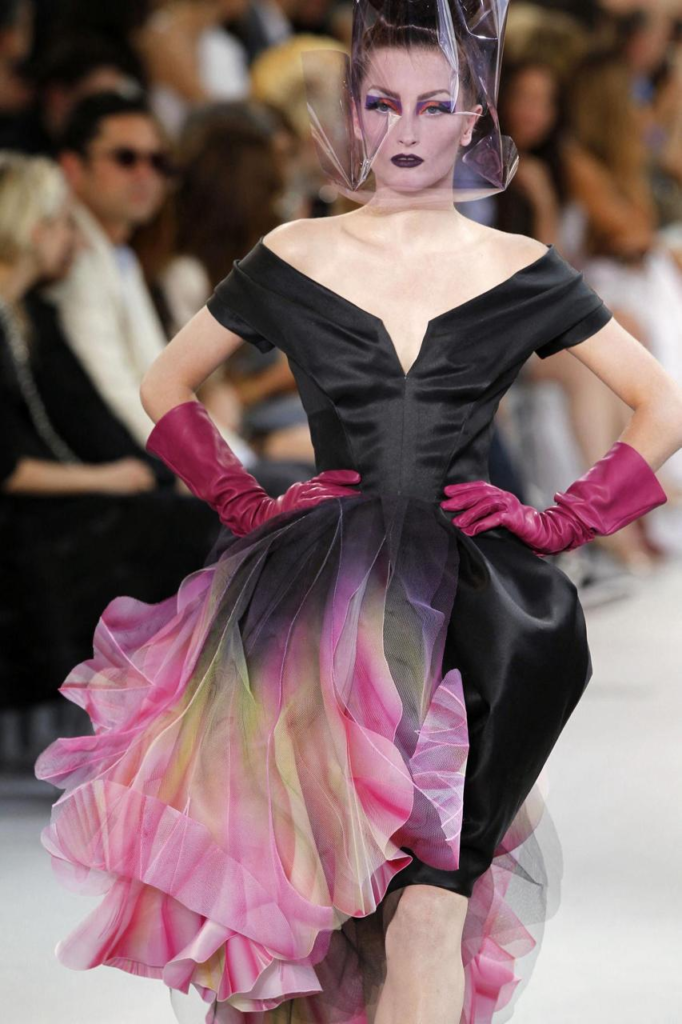
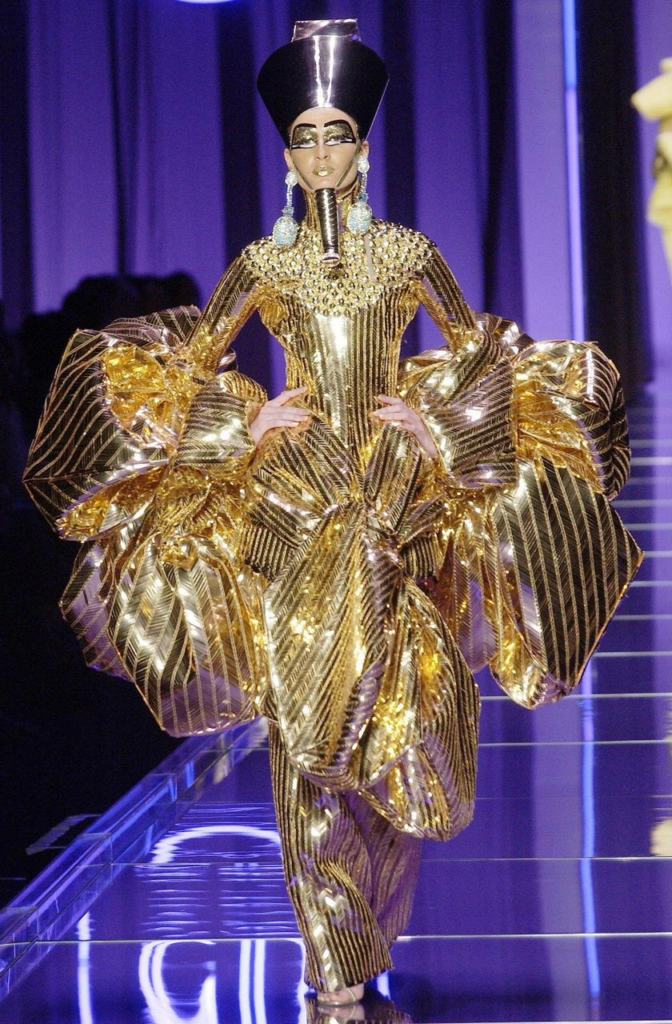
His runway shows became productions on an extraordinary scale. Models appeared as aristocrats, explorers, movie stars and imaginary historical figures. Hair, makeup, music and set design were treated with the same attention as the clothes themselves.
Galliano left Dior in 2011 following a major scandal that temporarily removed him from the centre of the fashion industry. His return came through Maison Margiela, where he was appointed creative director in 2014.
Nearly a decade later, his Spring 2024 Artisanal collection for Margiela became one of the most discussed couture presentations of recent years. Staged beneath Paris’s Pont Alexandre III, the show presented ghostly characters with porcelain-like makeup, extreme corsetry and bodies transformed through construction and illusion.
Galliano left Maison Margiela in 2024, closing another major chapter of his career.
Across Dior, Margiela and his own label, one idea has remained constant: Galliano designs characters before he designs clothes. His collections invite the viewer into another time, another identity and sometimes an entirely invented reality.
For John Galliano, fashion begins when imagination takes control.