Gianni Versace: The Man Who Defined the 1990s
Few designers shaped the visual language of the 1990s as completely as Gianni Versace. His world was built on gold, colour, exposed skin, classical mythology and unapologetic glamour. At a moment when minimalism was gaining influence, Versace moved in the opposite direction – creating clothes designed to be seen, photographed and remembered.
Born in Reggio Calabria, Italy, in 1946, Versace learned about dressmaking in his mother’s atelier before moving to Milan in the 1970s. He founded his own fashion house in 1978, but it was during the late 1980s and 1990s that his vision reached its most influential form.
Versace understood the relationship between fashion, celebrity and popular culture earlier than most. His January 1991 show produced one of the defining images of the supermodel era: Naomi Campbell, Christy Turlington, Linda Evangelista and Cindy Crawford walking together while lip-syncing to George Michael’s Freedom! ’90. Models were no longer anonymous figures presenting clothes. Under Versace, they became stars.
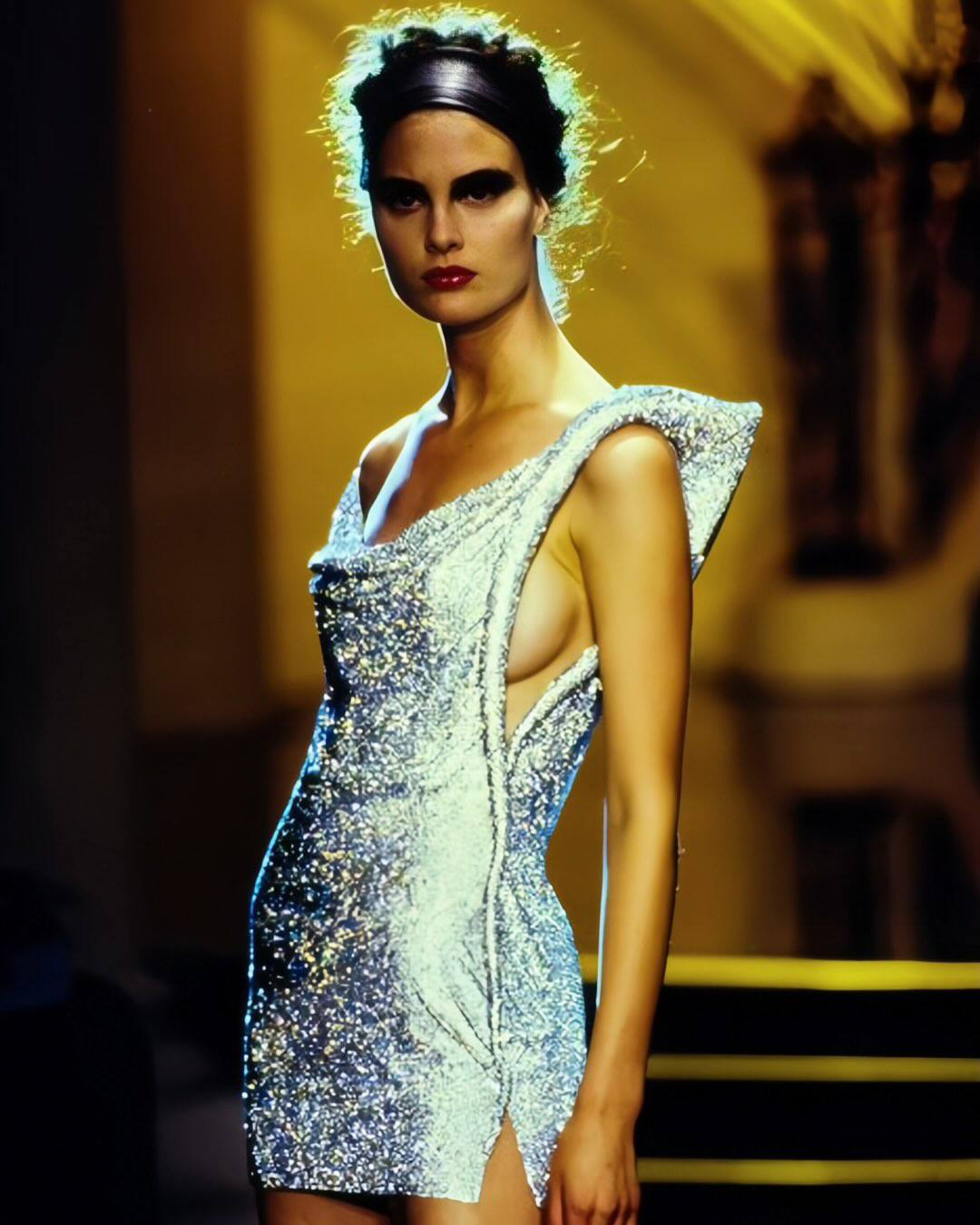
His clothes matched their presence. Chainmail dresses moved like liquid metal across the body. Baroque prints covered silk shirts, leggings and dresses in gold. Safety pins transformed a black dress worn by Elizabeth Hurley in 1994 into one of the decade’s most recognisable red-carpet looks. Leather, bondage references, corsetry and vivid colour appeared alongside impeccably constructed evening gowns.
Versace constantly mixed references that were traditionally kept apart. Ancient Greece met pop culture, Renaissance ornament met sexuality, and couture craftsmanship appeared beside the visual excess of nightlife. The Medusa became the perfect symbol for his house – classical, seductive and slightly dangerous.
By the mid-1990s, Versace had created an entire universe around this aesthetic. Madonna, Elton John, Princess Diana and countless musicians and Hollywood stars entered his circle, while photographers including Richard Avedon helped turn his campaigns into some of fashion’s defining images.
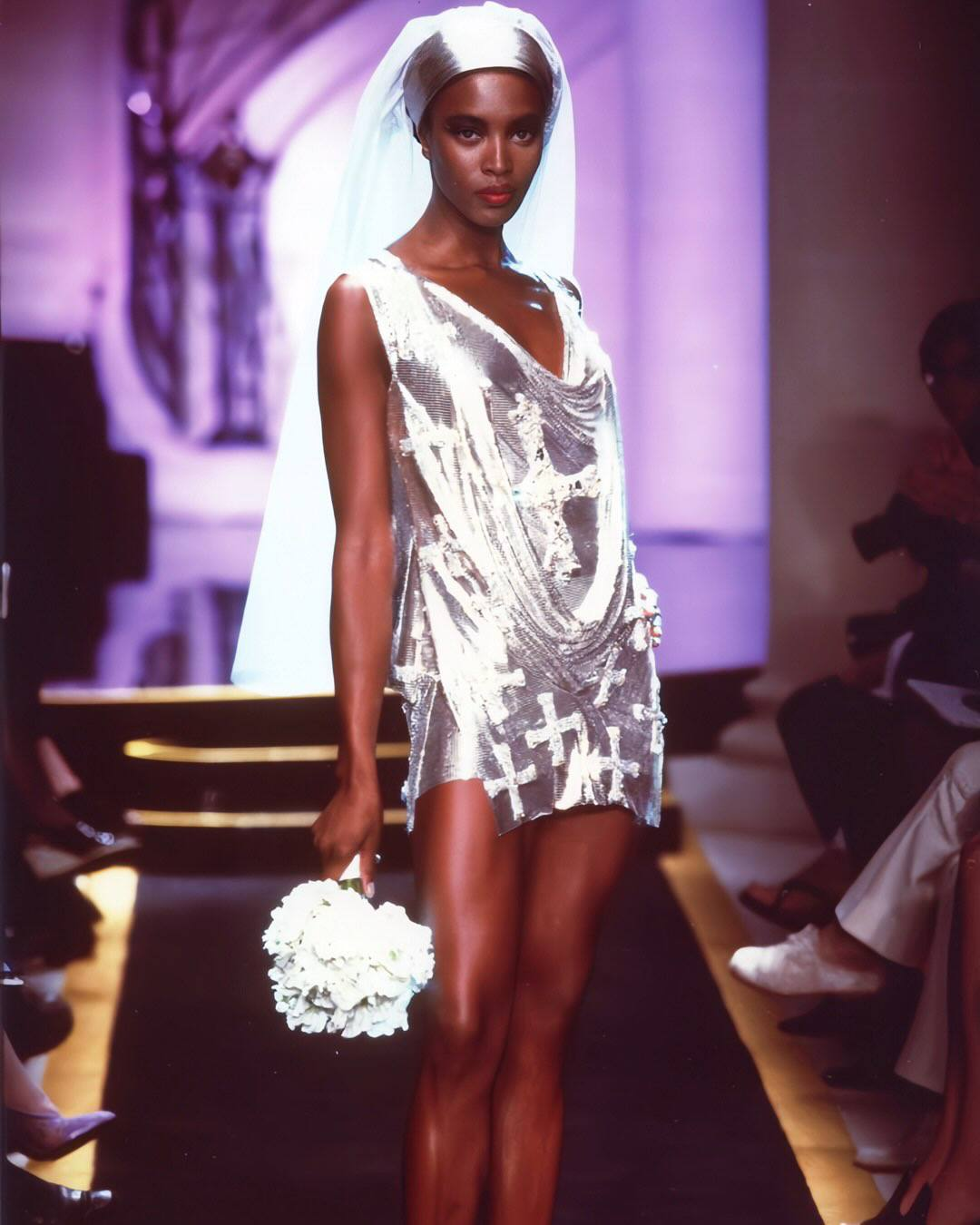
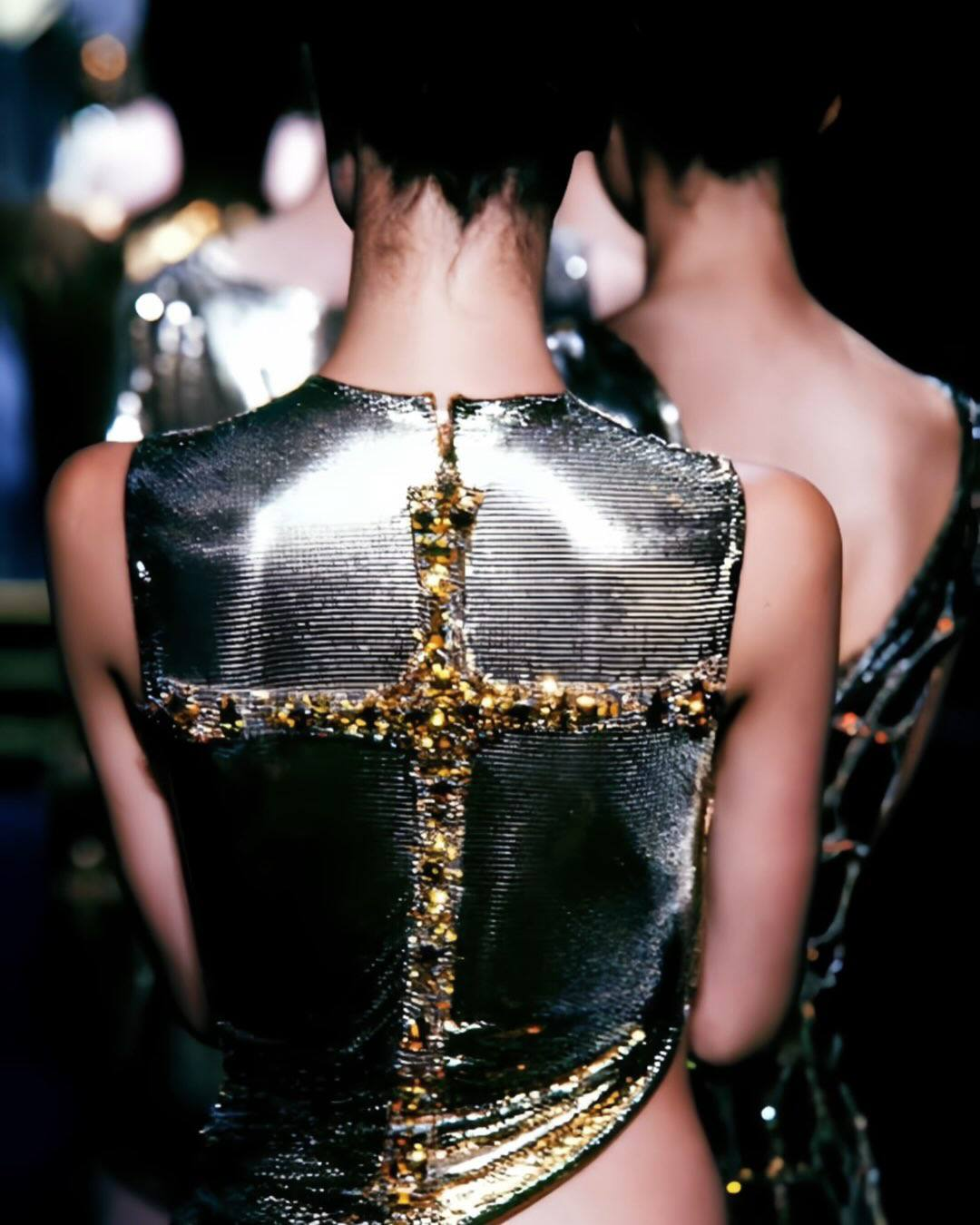
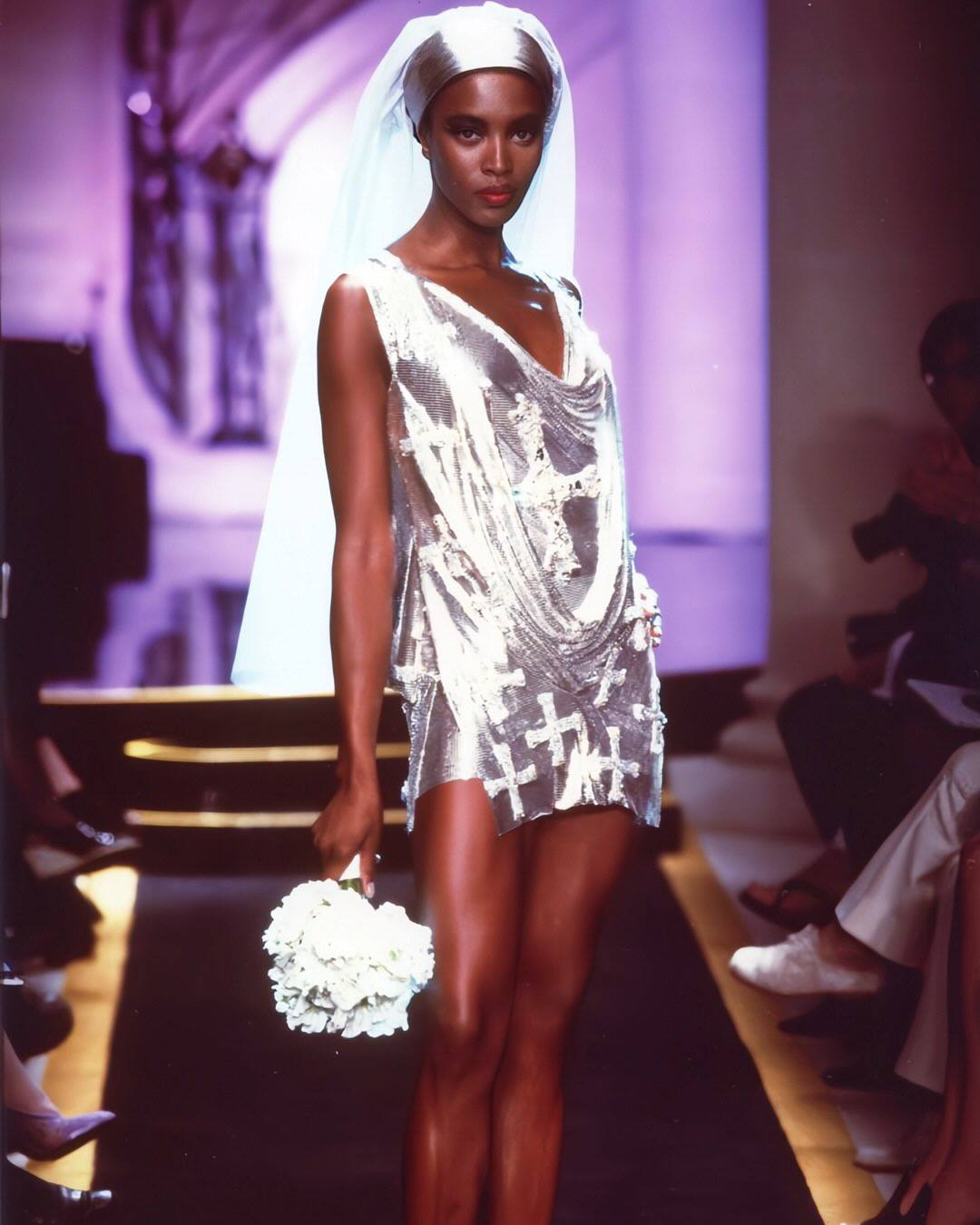
In July 1997, Gianni Versace presented his final Atelier Versace Haute Couture collection at The Ritz in Paris. Darker and more ceremonial than much of his earlier work, the collection combined crosses, medieval references, metallic embroidery and sculptural silhouettes. Nine days later, Versace was murdered outside his Miami Beach home. He was 50 years old.
His influence on fashion did not end with the decade he helped define. The supermodel spectacle, the relationship between designers and celebrities, the return of archival runway pieces and fashion’s continuing fascination with the extravagant glamour of the 1990s all carry traces of Gianni Versace.
He understood that a dress could become an image, an image could become a cultural moment, and a cultural moment could make fashion history.