Alexander McQueen: Fashion as Beautiful Violence
Alexander McQueen turned fashion shows into performances long before spectacle became an industry standard. Models walked through fire, played human chess, appeared inside glass boxes and stood on rotating platforms while robots sprayed their dresses with paint. For McQueen, the runway was a place for storytelling – sometimes beautiful, sometimes disturbing, and rarely predictable.
Lee Alexander McQueen was born in London on March 17, 1969. At sixteen, he left school and began an apprenticeship on Savile Row, where he mastered traditional tailoring. He later studied at Central Saint Martins, graduating in 1992 with the collection Jack the Ripper Stalks His Victims. Isabella Blow famously bought the entire collection and became one of his earliest supporters.
McQueen quickly developed a visual language built around sharp tailoring, historical references, nature and the human body. His controversial Highland Rape collection in 1995 explored the violent history of Scotland, while later shows pushed fashion increasingly closer to theatre and performance art.
In 1996, at only 27, McQueen was appointed head designer of Givenchy. He remained at the French house until 2001 while simultaneously developing his own label, where his most experimental ideas came to life.
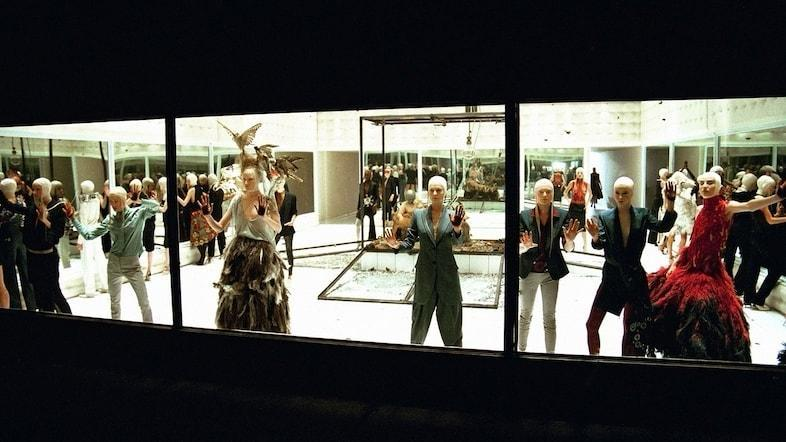
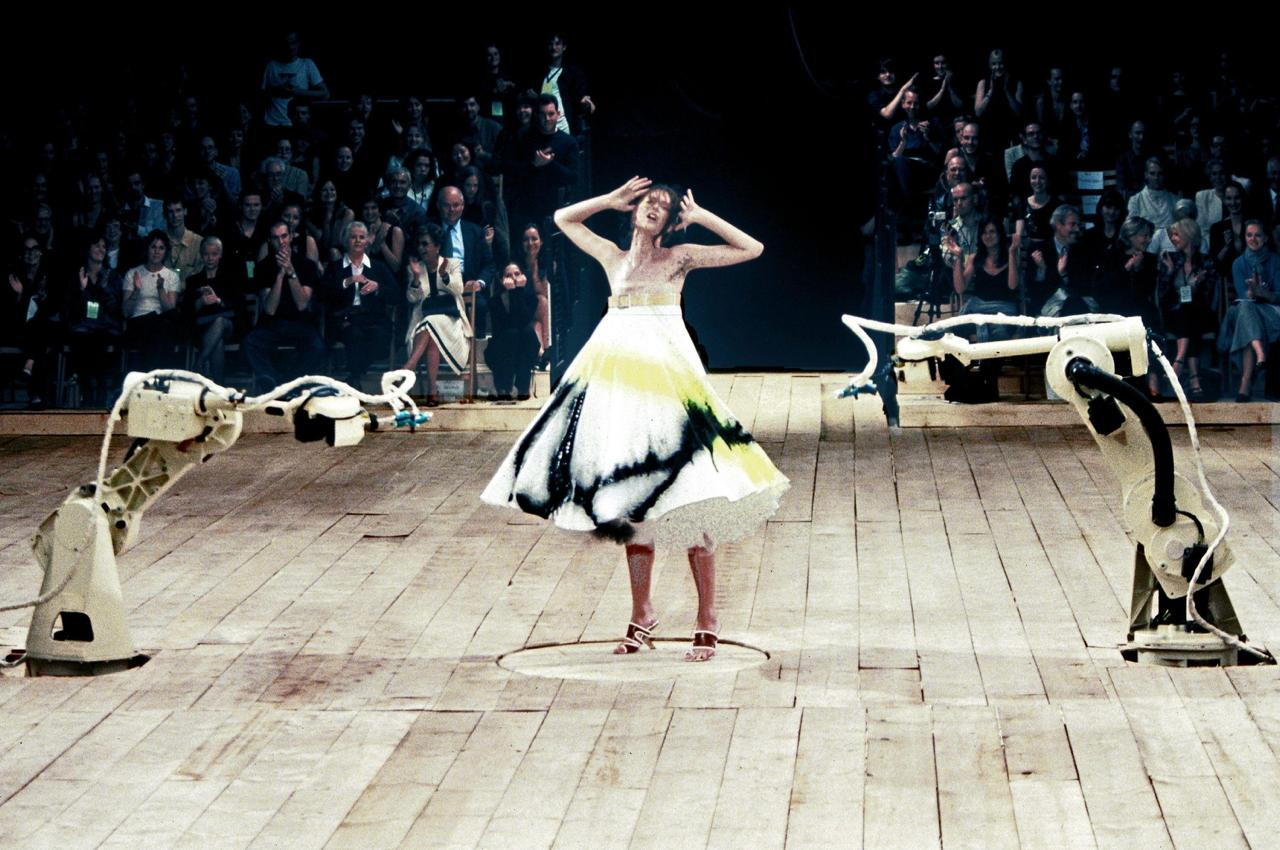
Some of his runway moments became part of fashion history. For Spring/Summer 1999, Shalom Harlow stood on a rotating platform as two industrial robots sprayed her white dress with black and yellow paint. In VOSS (Spring/Summer 2001), models appeared inside a mirrored glass box that transformed the audience itself into part of the performance. In Widows of Culloden (2006), a ghostly holographic image of Kate Moss floated above the runway.
His final fully realised collection, Plato’s Atlantis for Spring/Summer 2010, imagined humanity evolving back toward the ocean. Digital reptilian prints, sculptural silhouettes and the now-iconic armadillo shoes created creatures that seemed caught somewhere between human, animal and machine.
Alexander McQueen died in London on February 11, 2010, at the age of 40. Yet his influence remains visible across contemporary fashion – in immersive runway productions, extreme silhouettes and the idea that a collection can tell a story far beyond the clothes themselves.
“You’ve got to know the rules to break them,” McQueen once said.
He knew them exceptionally well. That is exactly why he could change them.
